Why Does My Crawl Space Keep Flooding in Houston
If your crawl space floods every time it rains hard, the problem is not one storm. It is the combination of Houston's clay soil, the water table, and the way older pier-and-beam homes were built. This guide explains why it keeps happening, and what actually helps, in the homes that have crawl spaces at all.
If your crawl space floods every time it rains hard, the problem is not one storm. It is the combination of Houston's clay soil, the water table, and the way older pier-and-beam homes were built. This guide explains why it keeps happening, and what actually helps, in the homes that have crawl spaces at all.
First: which Houston homes have crawl spaces
Most Houston homes do not have crawl spaces. The majority of post-1960 homes are slab-on-grade, built directly on a concrete slab with no space underneath. Crawl spaces belong to older pier-and-beam homes, concentrated in the inner loop: the Heights, Montrose, and parts of River Oaks and the Museum District, where houses were built up on piers before slab construction took over.
That matters, because advice written for crawl spaces does not apply to a slab home, and advice written for basements does not apply to Houston at all. Houston homes rarely have basements. If your home is a pier-and-beam house with a space underneath, this guide is for you. If it is a slab home, the water is coming in at ground level, not from below, and the fix is different.
Clay soil and the water table
Houston sits on Houston Black and Beaumont clays, expansive soils that swell when wet and shrink when dry. The clays are classed as high to very-high shrink-swell soils, and cracks in the dry soil can run 0.5 to 4 inches wide and more than 80 inches deep. When rain arrives, the dry, cracked clay takes in water fast at first, then swells and seals, and the water that cannot soak in has to go somewhere. Under a pier-and-beam house, that somewhere is often the crawl space.
The water table is high across much of Houston, and the ground is flat, so water that collects under a house drains slowly. A crawl space that floods in a storm may stay damp for days after the rain stops, because there is no slope for the water to run down.
Drainage and grading around the house
The most common reason a crawl space keeps flooding is drainage. Gutters that dump water at the foundation, downspouts that discharge beside the house, soil that slopes toward the walls, and low spots that collect water all send rain straight under the house. In Montrose and the Heights, where the lots are small and the houses sit close to the street, there is often little room for water to go anywhere but under the house.
Check the grading first. Soil should slope away from the foundation, and downspouts should carry water well away from the walls. Check the vents in the crawl space walls: they should be clear, not blocked by soil, mulch, or debris. A crawl space that cannot breathe stays damp, and a damp crawl space is a crawl space that smells musty and grows mold.
What flooding does under the house
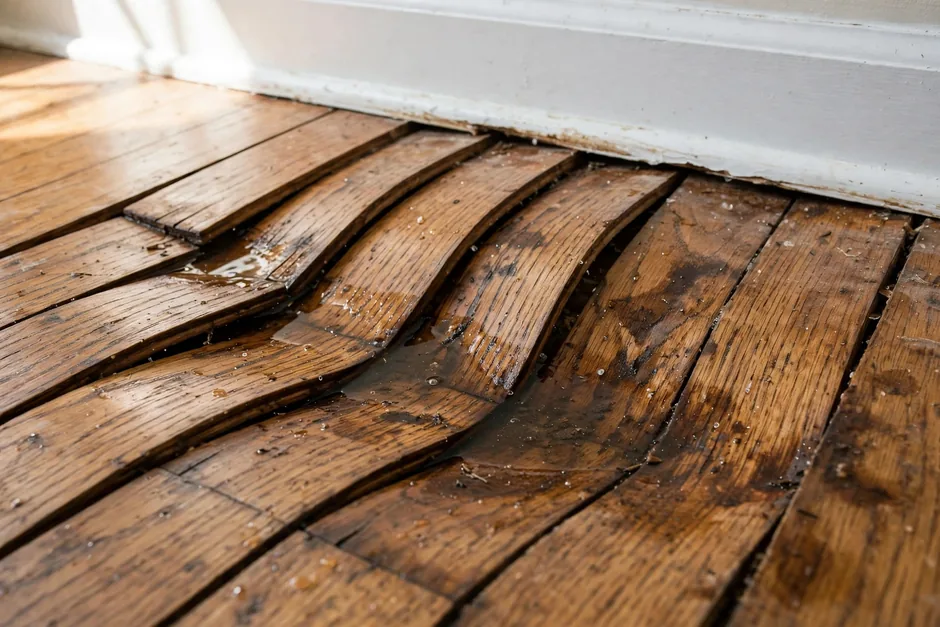
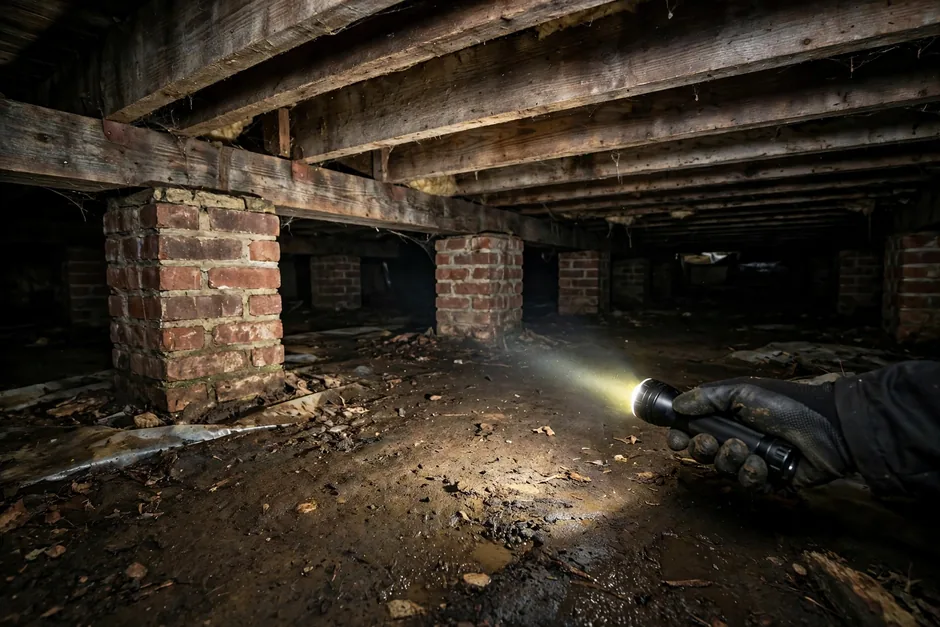
Standing water under a house does damage you cannot see from the living room. It soaks the floor joists and the subfloor from below, it wets the insulation between the joists, and it creates the damp conditions where mold grows on the wood. Over time, repeated flooding can rot joists and soften the subfloor, and the first sign inside the house is often a floor that feels soft or bouncy in one spot, or a musty smell that never quite goes away.
Our structural drying and dehumidification in Houston work under pier-and-beam homes starts with the same step as everywhere else: remove the water, then dry the structure, then check the moisture readings in the joists and subfloor until they are dry. Drying time depends on the amount of water, the materials, and the ventilation under the house, so no honest answer gives a fixed number of days in advance.
What helps, and what does not
What helps is drainage: grading, gutters, and downspouts that move water away from the house. What helps is ventilation: clear vents that let air move under the house. What helps is removing standing water promptly and drying the joists and subfloor, rather than waiting for the next dry spell.
What does not help is sealing the crawl space vents shut, which traps moisture inside, or pouring concrete into the crawl space without addressing the drainage, which moves the water somewhere else. Foundation repair is a separate trade from restoration, and if the piers themselves have moved, a foundation specialist needs to look at the house before any drying plan is final. Restoration deals with the water damage. The foundation trade deals with the foundation.
When to call a professional
Call a professional when the crawl space floods repeatedly, when the water stays for more than a day after the rain, when you can smell mold from inside the house, or when the floor above feels soft or uneven. Those are signs the water is doing structural damage, not just making a mess. If standing water is still under the house, emergency water extraction removes it before any drying plan is set.
If mold is found under the house, the Texas rules apply. In Texas, mold remediation of 25 contiguous square feet or more requires a TDLR-licensed remediator, and the company that assesses the mold cannot remediate the same job. IICRC S500/S520 are industry standards, not law. In The Heights, where many pier-and-beam homes sit in historic districts, exterior work can also need approval from the Houston Archaeological and Historical Commission, so check before any exterior repair starts.
Frequently Asked Questions
Why does my crawl space keep flooding in Houston?
Houston's expansive clay soil, high water table, and flat ground mean water collects under pier-and-beam homes and drains slowly. Poor grading, gutters that discharge at the foundation, and blocked crawl space vents make it worse, so the same crawl space floods in every hard rain.
Do most Houston homes have crawl spaces?
No. Most post-1960 Houston homes are slab-on-grade with no space underneath. Crawl spaces belong mainly to older pier-and-beam homes in the inner loop, including the Heights, Montrose, and parts of River Oaks. Houston homes rarely have basements.
What damage does a flooded crawl space cause?
Standing water soaks floor joists and the subfloor from below, wets insulation, and creates damp conditions where mold grows on wood. Repeated flooding can rot joists and soften floors, which first shows inside as a soft or bouncy floor or a musty smell.
How do I stop my crawl space from flooding?
Fix the drainage first: grade soil away from the foundation, extend downspouts away from the walls, and keep crawl space vents clear. Remove standing water promptly and dry the joists and subfloor. Sealing vents shut traps moisture and makes the problem worse.
Should I call a professional for a flooded crawl space?
Yes, when it floods repeatedly, when water stays more than a day after rain, when you smell mold inside, or when the floor above feels soft or uneven. If mold is involved, the Texas licensing rules apply, and if the piers have moved, a foundation specialist needs to look at the house.
Crawl space flooding in your Houston home
Drainage first, drying second, and an honest check of the joists underneath. Call Restoration Enterprise at (346) 980-0009. We remove the water, dry the structure, and check the moisture where you cannot see it.
Sources
Sources for the rules and figures cited in this guide.
- Harris County Flood Control District — Hurricane Harvey Report — the county's account of Harvey flooding in Harris County.
- City of Houston — Chapter 19, Floodplain (PDF) — Houston's floodplain ordinance, including the permit rules for work in a floodplain.
- Harris County Flood Control District — Maintained Detention Basins — how the county's detention basins reduce flooding.