Water Extraction vs Structural Drying: Which Do You Need
Water extraction and structural drying are two different jobs, and most water damage in Houston needs both. Extraction removes the water you can see. Drying removes the water you cannot. Here is how each one works, how to tell which your home needs, and why skipping the second step is the most common mistake after a leak.
Water extraction and structural drying are two different jobs, and most water damage in Houston needs both. Extraction removes the water you can see. Drying removes the water you cannot. Here is how each one works, how to tell which your home needs, and why skipping the second step is the most common mistake after a leak.
What water extraction does
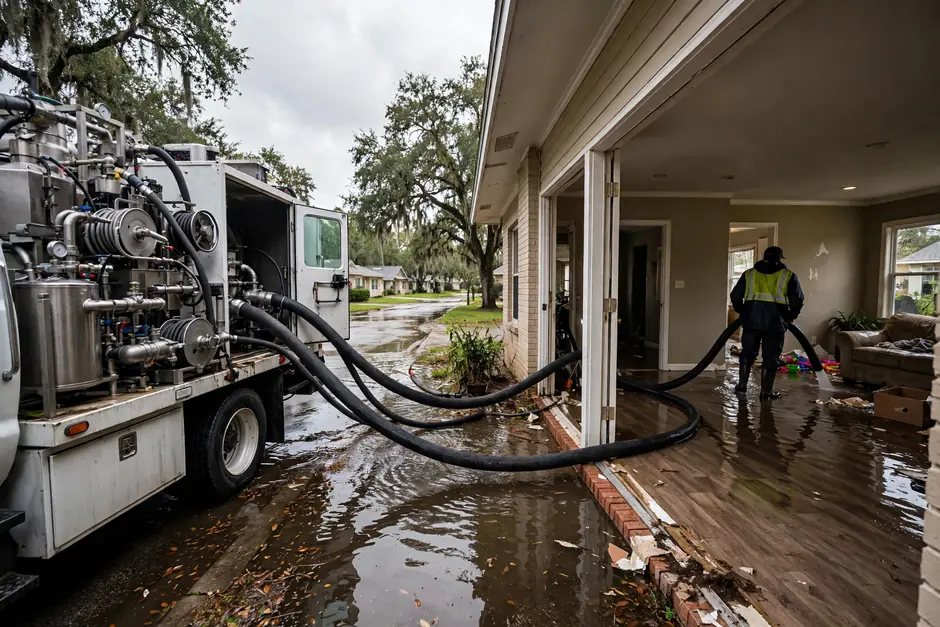
Extraction is the mechanical removal of liquid water: the standing water on the floor, the water soaked into the carpet and pad, and the water pooled in the lowest rooms. It is done with extraction units, including truck-mounted equipment for large losses and portable units for smaller ones. Extraction is fast, and it is the first step, because liquid water that is not removed keeps spreading into materials.
Our emergency water extraction in Houston work starts the moment the water source is stopped and it is safe to enter. The goal is simple: get the liquid water out before it soaks any deeper into the structure.
What structural drying does
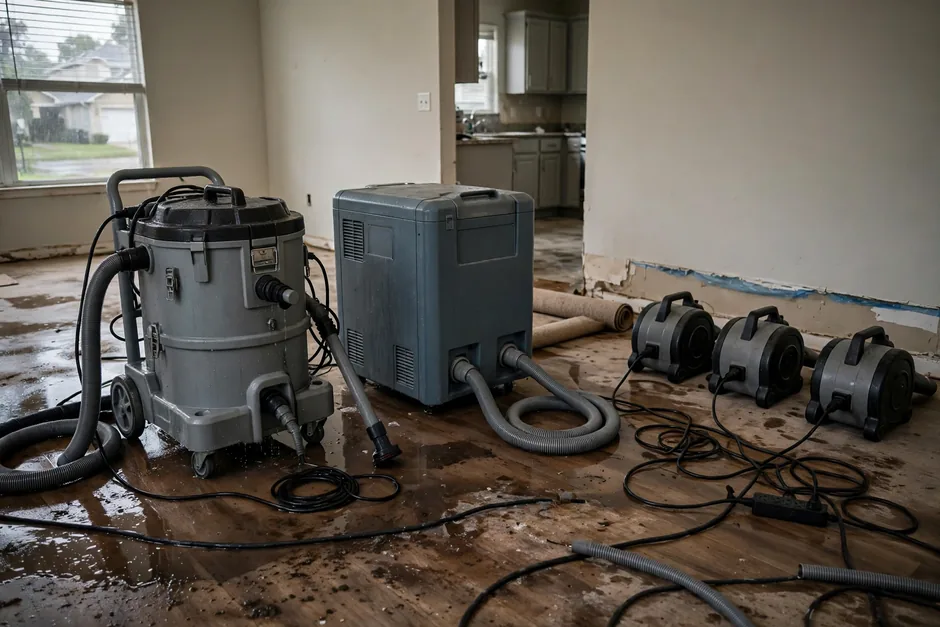
Drying is what happens after the liquid water is gone. Air movers push dry air across wet surfaces, dehumidifiers pull the moisture out of the air, and moisture meters track the readings in the drywall, the wood, the subfloor, and the concrete until they are dry. Drying removes the water that has soaked into materials, including the water inside wall cavities and under flooring that extraction cannot reach.
Structural drying and dehumidification in Houston is the longer of the two steps, and its length depends on the category of the water, the class of the damage, the materials, and Houston's humidity. No honest answer gives a fixed number of days in advance, because the drying time is decided by moisture readings taken during the job.
How to tell which one your home needs
If there is standing water, you need extraction. That part is obvious. The question most homeowners miss is whether they also need drying, and the answer is almost always yes. If water has touched drywall, wood, flooring, or concrete, moisture has soaked into those materials, and it will not come out on its own in Houston's humidity. A floor that feels dry to the touch can still be wet underneath.
There are only two situations where extraction alone is enough: a small, clean-water spill on a hard, non-porous surface that was cleaned up immediately, and a loss where a professional has measured the materials and confirmed they are dry. In every other case, drying follows extraction. In Memorial, where many homes have hardwood and plaster over slab, the drying step is often the longer part of the job, because those materials hold water for far longer than drywall does.
Why most losses need both
The two steps follow each other for a physical reason. Extraction removes liquid water, which is far faster than waiting for it to evaporate. Drying then removes the moisture that has already soaked into materials, which extraction cannot reach. Skipping extraction means the drying equipment is fighting standing water. Skipping drying means the structure stays wet after the visible water is gone, and wet material is where mold takes hold.
The sequence is extraction, then drying, then monitoring. Our water damage restoration in Houston work follows that order on every loss, and the monitoring step is what confirms the job is finished, not the calendar.
How drying is verified
Drying is verified with moisture readings, not with a look or a touch. The crew takes readings in the affected materials and in dry materials nearby for comparison, and keeps drying until the affected readings return to dry. That comparison is the point: a number on its own means little, but a wet wall next to a dry wall tells the crew exactly what is left to do.
Ask any crew you hire how they will verify drying, and what readings they expect to see. If the answer is a number of days rather than a measurement, the job is being guessed at, not measured.
The mistake that costs the most
The most expensive mistake after a leak is stopping at extraction. The floor looks dry, the carpet feels dry, and the homeowner assumes the job is done. Weeks later the baseboards pull away, the paint bubbles, and the smell returns. By then the water has been sitting in the wall cavity or under the floor for weeks, and the repair is a remediation job rather than a drying job.
If mold is found after a loss that was not dried properly, the Texas rules apply. In Texas, mold remediation of 25 contiguous square feet or more requires a TDLR-licensed remediator, and the company that assesses the mold cannot remediate the same job. IICRC S500/S520 are industry standards, not law. Mold assessment is a separate licensed activity from remediation.
Frequently Asked Questions
What is the difference between water extraction and structural drying?
Extraction removes liquid standing water with extraction equipment. Structural drying removes the moisture soaked into drywall, wood, flooring, and concrete with air movers and dehumidifiers, tracked by moisture meters until the materials are dry.
Which do I need: extraction or drying?
If there is standing water, you need extraction. If water has touched drywall, wood, flooring, or concrete, you almost always need drying as well, because moisture soaks into those materials and will not come out on its own in Houston's humidity.
How long does structural drying take?
It depends on the category of the water, the class of the damage, the materials, and Houston's humidity. No honest answer gives a fixed number of days in advance. Drying is verified by moisture readings, not by a calendar.
Can I dry water damage myself with fans?
Fans alone do not dry a structure. Drying needs air movers, dehumidifiers, and moisture monitoring, and it needs the home closed up so the equipment can pull moisture out of the materials. Opening windows in Houston brings more humid air in.
Why does my floor still feel damp after extraction?
Because extraction removes liquid water, not the moisture soaked into the floor, the pad, or the slab underneath. That moisture is the drying step's job, and it is why a floor can feel dry on top while the layers below are still wet.
Water in your Houston home
Extraction first, drying second, verified by measurement. Call Restoration Enterprise at (346) 980-0009. We remove the water, dry the structure, and check the hidden moisture so the job is finished properly.
Sources
Sources for the rules and figures cited in this guide.
- ANSI/IICRC S500 — Standard for Professional Water Damage Restoration — the industry standard for professional water damage restoration.
- IICRC — Standards — the IICRC standards library, including S500 and S520.