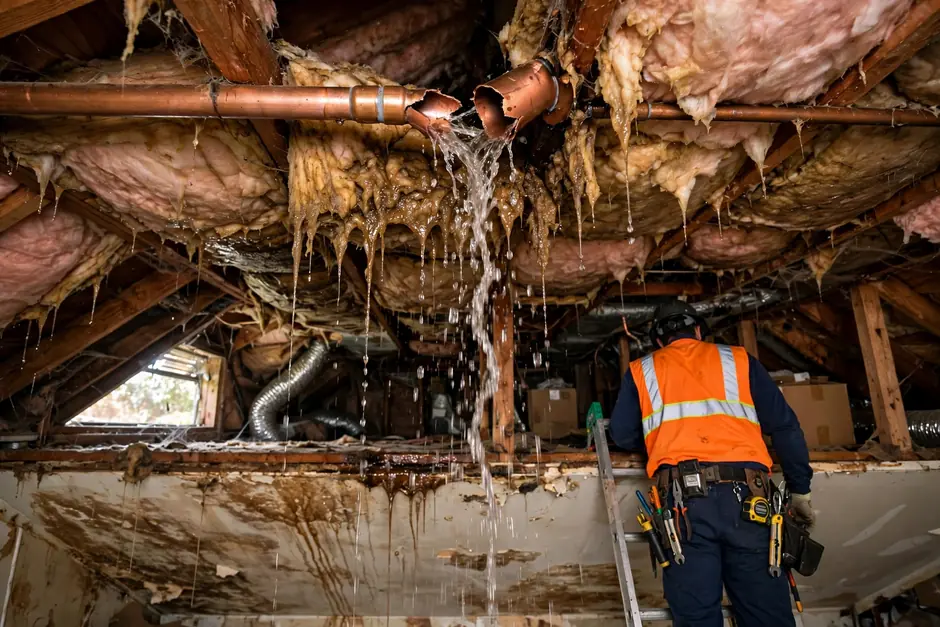
How to Dry Out a Wet Carpet After a Pipe Burst
A burst pipe can soak a carpet in minutes, and the question every Houston homeowner asks next is whether the carpet can be saved. The answer depends on the water, the time, and the pad underneath. Here is what to do first, how professional drying works, and how to tell when the carpet is a loss.
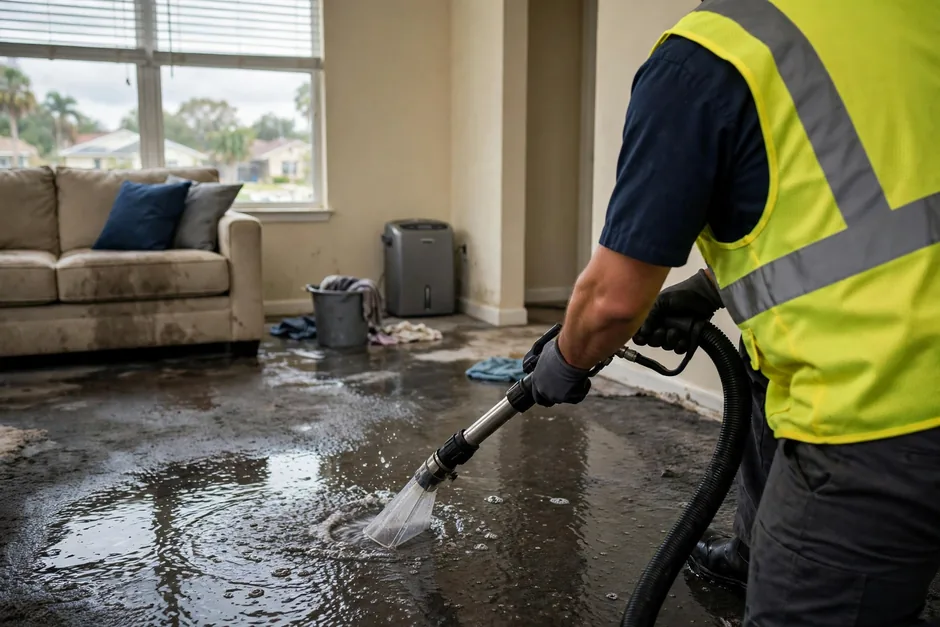
A burst pipe can soak a carpet in minutes, and the question every Houston homeowner asks next is whether the carpet can be saved. The answer depends on the water, the time, and the pad underneath. Here is what to do first, how professional drying works, and how to tell when the carpet is a loss.
First: stop the water, then the power risk
Shut off the main water valve first. A burst pipe keeps feeding water until the supply is off, and no amount of towelling helps while the pipe is still running. If water is near outlets, power strips, or appliances, switch off the breaker for the affected rooms from a dry place. Do not step into standing water near electrics.
Our burst pipe water damage in Houston guidance starts the same way every time: stop the source, stay safe, then deal with the water. Plumbing repairs the pipe. Restoration deals with the water damage the burst caused.
Remove the standing water fast
Once the water is off, get the standing water out. A wet and dry vacuum works for small areas. Towels help at the edges. But a soaked carpet holds far more water than it looks like it does, and most of it is in the pad underneath, not the carpet fibers you can see. Emergency water extraction in Houston uses weighted extraction equipment that presses water out of the carpet and pad, which is the step that decides whether the carpet can be saved at all.
Do not use a household vacuum cleaner on standing water, and do not run a regular fan straight onto a soaked carpet and assume the job is done. Surface drying leaves the pad wet, and a wet pad is where the smell starts.
Lift, separate, and let air reach the pad
Carpet dries from the top and the bottom. Lifting a corner of the carpet and pulling back the pad lets air reach both, and it lets a crew check the subfloor underneath. On Houston's slab floors, water sits between the pad and the concrete and has nowhere to drain. On pier-and-beam homes, water can also run down into the space below the floor, which is why the drying plan has to look underneath, not just at the surface.
Furniture should be moved off the wet carpet and its legs set on blocks or foil. Wet furniture legs stain carpet and wick water upward into the wood. In Spring Branch, where many homes are mid-century ranch houses on slab, this is a familiar pattern after a burst supply line: the carpet looks damp, the pad is soaked, and the slab underneath is holding water.
How structural drying actually works
Structural drying and dehumidification in Houston is not the same as opening windows and hoping. Air movers push dry air across wet surfaces, dehumidifiers pull the moisture out of the air, and moisture meters track the readings in the carpet, the pad, and the subfloor until they return to dry. Drying time depends on the amount of water, the materials, and Houston's humidity, so no honest answer gives a fixed number of days in advance.
What matters is the monitoring. A crew that measures moisture in the pad and the slab, and keeps drying until the readings are dry, is doing the job properly. A crew that packs up when the carpet feels dry to the touch is leaving water in the pad.
When carpet and pad can be saved, and when they cannot
Clean water from a burst supply line, caught quickly and extracted properly, often means the carpet can be saved. The pad is the deciding factor. Pad that has been soaked for a long time, pad that has begun to smell, and pad under carpet that was already old or thin are often replaced rather than dried. Carpet that was wet with contaminated water is a different matter entirely and is usually removed.
Smell is the honest test. If the carpet still smells musty after it is dry, the pad underneath is still wet or contaminated. That is the point to call a professional rather than keep drying on your own.
What not to do with a wet carpet
Do not shampoo a wet carpet. Shampoo adds water and detergent to a problem that is already too wet, and it does nothing for the pad. Do not paint or seal over a damp subfloor. Do not put furniture back on a carpet that still feels cool or damp to the touch. And do not wait a week to see whether it dries on its own. Houston's humidity is not on your side, and wet carpet that stays wet grows mold quickly.
In Texas, mold remediation of 25 contiguous square feet or more requires a TDLR-licensed remediator, and the company that assesses the mold cannot remediate the same job. IICRC S500/S520 are industry standards, not law. If mold is involved, the licensing rules shape who can do the work and how it is verified.
Frequently Asked Questions
Can a wet carpet be saved after a pipe burst?
Often, yes, if the water was clean supply water, it was caught quickly, and the carpet and pad were extracted and dried properly. The pad is the deciding factor: soaked, smelly, or contaminated pad is usually replaced rather than dried.
How do you dry out a wet carpet after a pipe burst?
Shut off the water, remove standing water with extraction equipment, lift the carpet to reach the pad and subfloor, then dry with air movers and dehumidifiers while moisture meters track the readings until the carpet, pad, and subfloor are dry.
Should I remove the carpet pad after a pipe burst?
Often. The pad holds most of the water and is the hardest part to dry. A professional will check the pad and the subfloor underneath and advise whether the pad can be dried or should be replaced.
Why does my carpet still smell after drying?
A smell after drying usually means the pad or subfloor underneath is still wet or contaminated. Surface drying does not reach the pad, and the smell will return until the layer underneath is dried or replaced.
Who fixes the burst pipe itself?
A plumber repairs the pipe. Restoration deals with the water damage the burst caused: extraction, drying, and removing damaged material. The two trades are separate, and both need to happen for the repair to last.
Wet carpet after a burst pipe in Houston
Stop the water, then call Restoration Enterprise at (346) 980-0009. We extract the water from the carpet and pad, dry the floor underneath, and tell you honestly whether the carpet can be saved.
Sources
Sources for the rules and figures cited in this guide.
- ANSI/IICRC S500 — Standard for Professional Water Damage Restoration — the industry standard for professional water damage restoration.
- IICRC — Standards — the IICRC standards library, including S500 and S520.